The Cycle Nobody Warned You About
If you're reading this, you probably recognize at least one of these situations.
- You brush carefully and still see pink in the sink when you floss.
- A sip of cold water sends a sharp pang through a tooth you swore was fine last year.
- You've tried mouthwash after mouthwash, and your breath still fades by mid-morning.
- Someone tells you to "just brush better," as if the problem were effort and not biology.
 Bleeding gums and recurring sensitivity are common signs of an imbalanced oral microbiome — not lack of effort.
"Brush harder" is one of the most unhelpful pieces of advice out there. In fact, aggressive brushing can make sensitivity worse by wearing down enamel and irritating already inflamed gum tissue. The real story is happening at a microscopic level, inside an ecosystem most people never think about: the oral microbiome.
Just like the gut, your mouth is home to billions of bacteria — some beneficial, some harmful. When that balance tips toward harmful strains, the visible results are the ones you already know too well: inflamed gums, persistent bad breath, and heightened sensitivity.
Why It's Not About Brushing Harder
For decades, oral care marketing focused almost entirely on mechanical cleaning — brush more, floss more, rinse more. But that approach ignores a crucial detail: plaque and inflammation aren't just about leftover food particles. They're about which bacterial populations are thriving in your mouth right now.
When odor-causing and inflammation-triggering bacteria outcompete the beneficial strains that naturally exist in a healthy mouth, the result is a mouth that feels "clean" for an hour after brushing — and then slides right back into the same old problems. That's why so many people feel like they're "fighting a losing battle" with their own mouths.
Think of the oral cavity as a garden. Aggressive antiseptic rinses act like scorched earth — they wipe out everything, good and bad alike, leaving space for whichever bacteria regrow fastest. Researchers studying oral probiotics are exploring whether reseeding that garden with beneficial strains helps it stay balanced longer.
— Simplified explanation of the oral microbiome rebalancing model studied in dental researchWant to understand the natural probiotic approach being studied to target exactly these points — gum health, fresh breath, and a balanced oral microbiome?
Discover the Full FormulaThe Microbiome Pillars Studied by Science
Researchers studying oral health keep circling back to a specific set of biological mechanisms tied to the mouth's bacterial ecosystem. None works alone — but together, they explain why "just brush and rinse" so often falls short for people with persistent issues.
| Area | What research observes | Commonly studied strains/compounds |
|---|---|---|
| Fresh breath | Certain strains help reduce volatile sulfur compounds linked to bad breath | Streptococcus salivarius K12 |
| Gum tissue support | Probiotic activity may help modulate the inflammatory response in gum tissue | Lactobacillus reuteri |
| Bacterial balance | Beneficial strains compete with harmful bacteria for space and nutrients | Lactobacillus paracasei, prebiotic inulin |
| Enamel & mineral support | Minerals contribute to the broader mineral balance associated with tooth structure | Zinc, Tricalcium phosphate |
Combining these pillars is what sets a complete oral-microbiome approach apart from a single-ingredient rinse. On their own, several of these strains already have published research behind them — combined into a daily routine, the potential support is broader.
 Specific probiotic strains, like S. salivarius K12 and L. reuteri, are among the most studied for oral microbiome balance.
A practical way to track your own pattern
Before making any changes to your routine, it can help to note a few things for a few days:
- Does your breath return quickly after brushing or using mouthwash?
- Do your gums bleed even with a soft-bristle brush and gentle technique?
- Is sensitivity triggered by specific temperatures, or has it become more constant?
- Have you already tried multiple toothpaste "for sensitive teeth" formulas with only short-term relief?
"I've Already Tried Everything, and Nothing Worked"
This is the most common objection — and it's a fair one. Many people have already gone through whitening toothpaste, antiseptic mouthwash, and sensitivity gels with no lasting results.
Part of the explanation lies in what those products actually do. Most rinses and pastes act only on the surface — killing bacteria on contact, without helping repopulate the mouth with beneficial strains that keep harmful bacteria in check afterward. That's why the same symptoms tend to resurface within hours.
That's why newer approaches combine targeted probiotic strains, prebiotics, and supportive minerals into a single daily chewable — designed to work with the mouth's natural ecosystem, rather than temporarily sterilizing it.
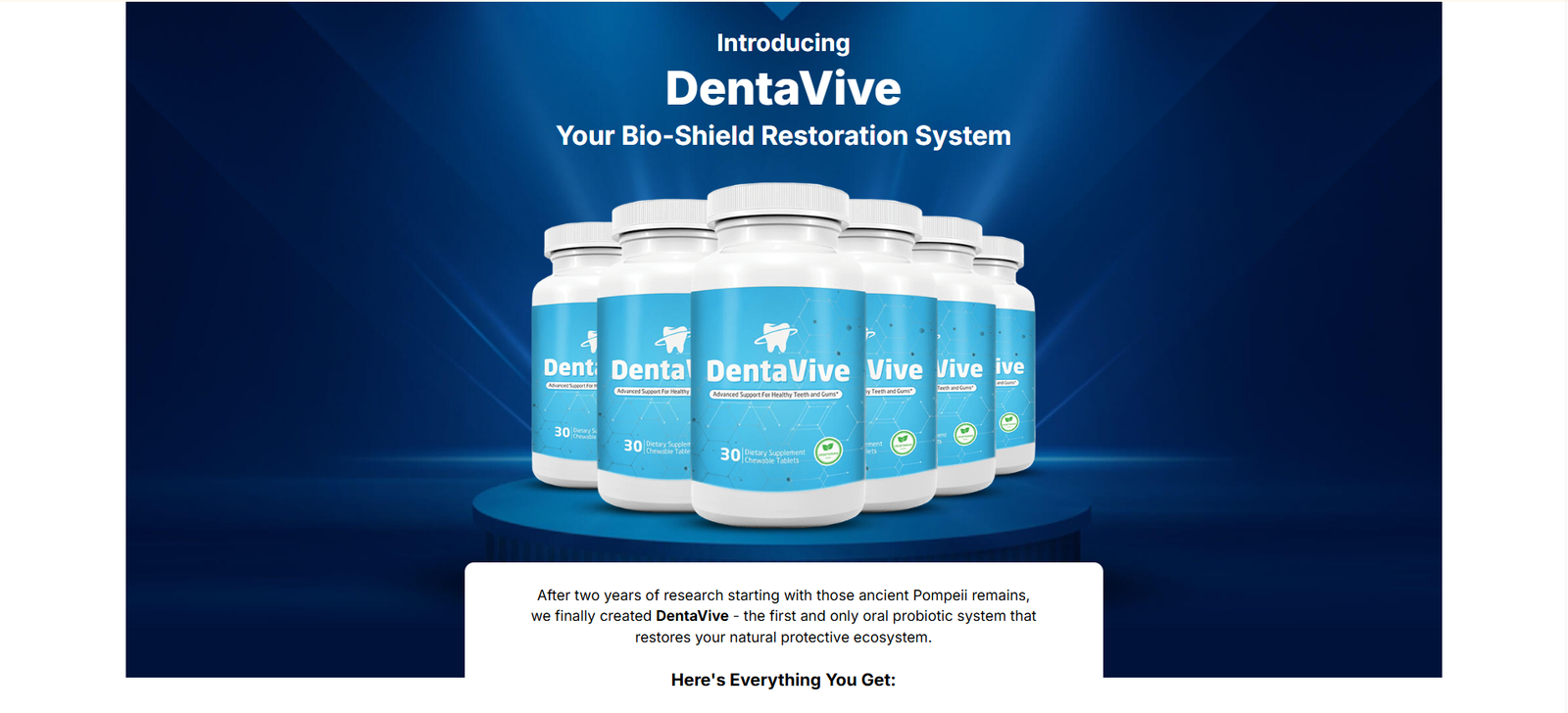
Dentavive — Oral Probiotic Chewables
A formula designed to support the pillars above — in a simple chewable format, with no need for complicated multi-step routines.
- 6-strain probiotic blend, including S. salivarius K12 & L. reuteri
- Chewable format — just a couple of tablets a day
- Plant-based, vegan-friendly formula
- Made following current manufacturing guidelines
- 60-day satisfaction guarantee
What Users Report
★★★★★
"By around week three my gums weren't bleeding when I flossed anymore. That had never happened before, even with the 'sensitive gums' toothpaste I'd used for years."
Renata S., 47★★★★★
"I can't tell you if it's the formula or the daily habit, but I stopped worrying about my breath fading by lunchtime after about a month."
Carlos M., 39★★★★★
"What I didn't expect was the effect on sensitivity. I started using it just for bad breath, but drinking cold water stopped being a wince-worthy moment."
Fernanda L., 52Individual testimonials. These are personal experiences and are not typical or guaranteed. Results vary from person to person.
A Realistic Results Timeline
Anyone promising overnight results should be treated with suspicion. If you decide to try a nutritional approach to oral care, it's worth being honest with yourself about pacing:
- Weeks 1–2: little to no noticeable change — this is an adjustment phase for the oral microbiome.
- Weeks 2–3: most reports mention fresher-feeling breath first, before other changes.
- Weeks 4–6: less gum sensitivity and reduced bleeding during flossing.
- Weeks 8–12: this is where the strongest reports about overall gum comfort appear — which is exactly why guarantee periods usually cover this window.
Buying one bottle and stopping after two weeks doesn't give the routine a fair test. That's why multi-bottle kits are the most commonly chosen option among people who've already tried the formula.
What to Consider Before Choosing a Supplement
Oral care supplements vary widely in strains, dosing, quality control, and suitability for your case. Before choosing any product, check for:
- A fully disclosed ingredient and strain list with clear usage instructions.
- Manufacturing that follows current quality and safety guidelines.
- A genuine, documented refund policy with accessible customer support.
- Honest language — "supports" and "helps maintain," never "cures" or "guarantees results."
If you have diagnosed periodontal disease, advanced gum recession, persistent oral pain, or are pregnant, breastfeeding, or immunocompromised, talk to a dentist or qualified healthcare professional before starting any supplement. Supplements should complement — never replace — professional dental care and regular checkups.
You've Already Tried Everything. Maybe It Was the Missing Microbiome Piece.
Dentavive is presented as a nutritional supplement option for adults interested in daily oral microbiome support. Review the official product information, full ingredient list, usage instructions, pricing, and guarantee terms before making a decision.
Visit the Official Dentavive PageSecure checkout available on the official website. This is a sponsored recommendation. Dentavive is not intended to diagnose, treat, cure, or prevent any disease. Individual experiences vary.
When Should You Seek Dental Guidance?
See a dentist promptly if you notice gum recession, loose teeth, persistent pain, pus, or bleeding that doesn't improve — these can be signs of advanced periodontal disease requiring professional treatment.
Seek medical or dental care if you have pre-existing conditions such as diabetes, are on ongoing medication that affects healing, or are preparing for a dental procedure, before starting any new supplement.
A Practical Next Step
Start by tracking your own gum, breath, and sensitivity patterns throughout the day. Assess the reversible factors — brushing technique, product choice, hydration, and diet — with professional support when needed. If you're also considering a nutritional option, apply the same discipline: read the ingredients, understand the limitations, check for interactions, and give the routine a fair evaluation window — at least 8 to 12 weeks.
Review the Official Dentavive Details
Explore the formulation, probiotic strains, usage instructions, guarantee, and current terms on the official page to decide whether this option fits your personal oral care goals.
See the Official Product DetailsAffiliate link. EmpowerFinds may receive compensation if a reader makes a purchase through this link.
References
- National Center for Biotechnology Information (PubMed). Oral probiotics and gum health outcomes.
- National Institutes of Health. Streptococcus salivarius K12 and halitosis.
- Mayo Clinic. Gum disease: symptoms, causes, and prevention.
- American Dental Association. Probiotics and oral health: what the evidence shows.