The Experience Most People Never Talk About
If you are reading this, there is a good chance you recognise at least one of these nights.
- The house is completely silent — and the ringing gets louder.
- You turn the TV up to "cover" it, and someone asks if you're going deaf.
- At a restaurant table, everyone laughs — and you smile without catching the joke.
- A doctor glances at your chart and says the cruellest sentence in modern medicine: "You'll have to learn to live with it."
Learn to live with it. As though it were a noisy neighbour — and not a sound nobody else in the world can hear, or even prove exists.
That invisibility is part of what makes it so isolating. Sleep suffers. Concentration suffers. Patience gets thinner. And because the audiogram often comes back "within normal range," many people quietly conclude the problem must be in their head.
You are also far from alone. According to the National Institute on Deafness and Other Communication Disorders, roughly 25 million U.S. adults have experienced tinnitus lasting five minutes or more.
In one very specific, very literal sense — the head is exactly where researchers are now looking.
Why Researchers Stopped Looking Only at the Ear
For decades, the search focused on the inner ear. But one observation never quite fitted the model: some people who lose auditory nerve function entirely still report hearing the sound.
If the input is gone and the sound continues, the sound was never generated by the input. This is why much of the modern scientific literature describes tinnitus as a central, neural phenomenon — a pattern of activity in the auditory pathways of the brain, rather than a noise produced inside the ear canal.
A related line of research describes what is often called hidden hearing loss, or cochlear synaptopathy. In this scenario the hair cells of the inner ear survive — so a standard audiogram can look normal — while the synaptic connections between those cells and the auditory nerve are reduced.
When input from the inner ear diminishes, the auditory system appears to compensate by increasing its own sensitivity — a process researchers refer to as central gain.
Think of the auditory brain as a microphone with automatic volume control. When the incoming signal weakens — through age, noise exposure, medication or reduced microcirculation — the system compensates by turning up its own gain. Like a microphone held too close to a speaker, it begins to whine with no real input at all.
— A simplified explanation of the "central gain" model discussed in hearing researchInterested in learning more about a nutritional option formulated around these hearing-wellness pathways?
Explore the Official InformationThe Four Factors Currently Studied
Researchers exploring the central-gain model tend to return to a small set of biological systems. None of these is a cure, and none works in isolation — but together they explain why a purely "ear-focused" approach so often disappoints.
| System | What researchers observe | Nutrients commonly discussed |
|---|---|---|
| Neural braking | Reduced inhibitory signalling may allow neurons to fire excessively | GABA |
| Signal clarity | Slower cholinergic processing can make sound feel "muddy" or crowded | Alpha-GPC |
| Microcirculation | Inner-ear capillaries are extremely fine; perfusion supports oxygen delivery | L-Arginine (nitric oxide pathway) |
| Attention & mood | Dopamine tone influences how much attention the brain gives the sound | L-Dopa (Mucuna), L-Tyrosine |
The fourth row is the one most people overlook. Two individuals can perceive an identical sound and rate their distress completely differently. Dopamine-related attention filtering is part of why. When that filter is running low, the ringing occupies the entire foreground of consciousness.
There is also a fifth variable that colours all of the above: chronic stress. Stress is widely reported as one of the strongest amplifiers of tinnitus perception, which is why adaptogenic and antioxidant compounds — such as Moomiyo (Himalayan shilajit) — appear in formulations built around this model.
A useful way to track your own pattern
Before speaking with a healthcare professional, it can help to note the details. This makes the conversation far more productive.
- Is the sound in one ear or both? Constant or intermittent?
- Does it pulse in time with your heartbeat?
- Is it worse at night, after caffeine, after loud environments, or under stress?
- Have there been recent medication, diet or lifestyle changes?
- Is there hearing loss, dizziness, fullness or pain alongside it?
"I've Already Tried Supplements. Nothing Happened."
This is the single most common objection — and it is a fair one. Many readers have already worked through ginkgo, zinc, magnesium and multi-ingredient capsules with little to show for it.
Part of the explanation may be simple pharmacokinetics. A capsule must survive the stomach and first-pass liver metabolism before anything reaches circulation. Compounds such as GABA and Alpha-GPC are particularly vulnerable on that journey, and a meaningful share can be degraded before absorption.
This is why some newer formulations use a sublingual spray instead: absorption through the mucous membrane under the tongue, bypassing much of the digestive route. Two sprays in the morning, two before bed — no tablets to swallow.
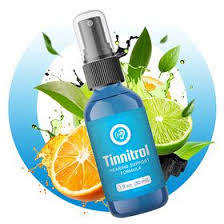
Tinnitrol Sublingual Hearing Support
A liquid formula built around the four pathways above — delivered under the tongue rather than swallowed as a capsule.
- Alpha-GPC, GABA, L-Arginine, L-Tyrosine, Mucuna & Moomiyo
- Sublingual delivery — 2 sprays morning, 2 sprays evening
- Produced in a GMP-registered facility · non-GMO
- 90-day satisfaction guarantee · free shipping on multi-bottle kits
What Readers Report
★★★★★
"Around week three I noticed something strange: I went several minutes without remembering to listen for the sound. That hadn't happened in six years."
Robert M., 63★★★★★
"I honestly can't tell you whether it's quieter or whether it just bothers me less. Frankly, I don't care. I'm sleeping again."
Linda F., 58★★★★★
"The unexpected part was mental clarity. I assumed that was just age. It was fatigue."
James T., 71Individual testimonials. These are personal experiences and are not typical or guaranteed. Results vary from person to person.
A Realistic Expectation Timeline
Anyone promising overnight silence should be treated with suspicion. If you decide to try a nutritional approach, it is worth being honest with yourself about pacing:
- Days 1–7: usually nothing noticeable. This is a saturation phase.
- Weeks 2–4: most reports mention sleep and general calm first — not volume.
- Weeks 4–8: the sound tends to move out of the foreground of attention.
- Weeks 8–12: this is where the strongest reports appear — which is precisely why the guarantee period runs 90 days.
Buying one bottle and stopping after twenty days does not give the protocol a fair test. This is the main reason the three-bottle kit is the most commonly selected option.
What to Consider Before Choosing a Supplement
Supplements differ enormously in ingredients, dosing, quality control and suitability. Before choosing anything, look for:
- A fully disclosed ingredient list with clear serving instructions.
- Manufacturing in a GMP-registered facility.
- A genuine, documented refund policy with accessible customer support.
- Honest language — "supports" and "helps maintain", not "cures".
If you take medication, are pregnant or breastfeeding, have a diagnosed condition, or are preparing for a procedure, speak with a qualified healthcare professional before starting any supplement. Supplements should complement — never replace — a prescribed treatment plan.
You've Already Waited Years. The Window Is 90 Days.
Tinnitrol is presented as a nutritional supplement option for adults interested in everyday hearing wellness. Review the official product information, full ingredient list, usage guidance, pricing and refund terms before making a decision.
Visit the Official Tinnitrol PageSecure checkout may be available on the official website. This is a sponsored recommendation. Tinnitrol is not intended to diagnose, treat, cure or prevent any disease. Individual experiences vary.
When Should You Seek Medical Care?
Contact a healthcare professional if the ringing is persistent, worsening, occurs in only one ear, pulses with your heartbeat, or is accompanied by hearing loss, ear pain, discharge or a sense of fullness.
Seek urgent medical attention for sudden hearing loss, severe vertigo, loss of coordination, new difficulty speaking, facial weakness, or any severe and unexpected neurological symptom.
A Practical Next Step
Start by documenting your pattern. Rule out the reversible contributors — noise exposure, medication side effects, blood pressure, stress and sleep debt — with a qualified professional. Then, if you are also considering a nutritional option, apply the same discipline: read the ingredients, understand the limits, check for interactions and give it a fair evaluation window.
Review the Official Tinnitrol Details
Explore the formulation, ingredients, usage instructions, guarantee and current terms on the official page to decide whether this option is relevant to your personal wellness goals.
See the Official Product DetailsAffiliate link. EmpowerFinds may receive compensation if a reader makes a purchase through this link.
References
- National Institute on Deafness and Other Communication Disorders. Tinnitus — Overview and Statistics. NIH.
- Kujawa SG, Liberman MC. Synaptopathy in the noise-exposed and aging cochlea. Hearing Research.
- American Tinnitus Association. Understanding the Facts About Tinnitus.
- Mayo Clinic. Tinnitus: Symptoms and Causes.